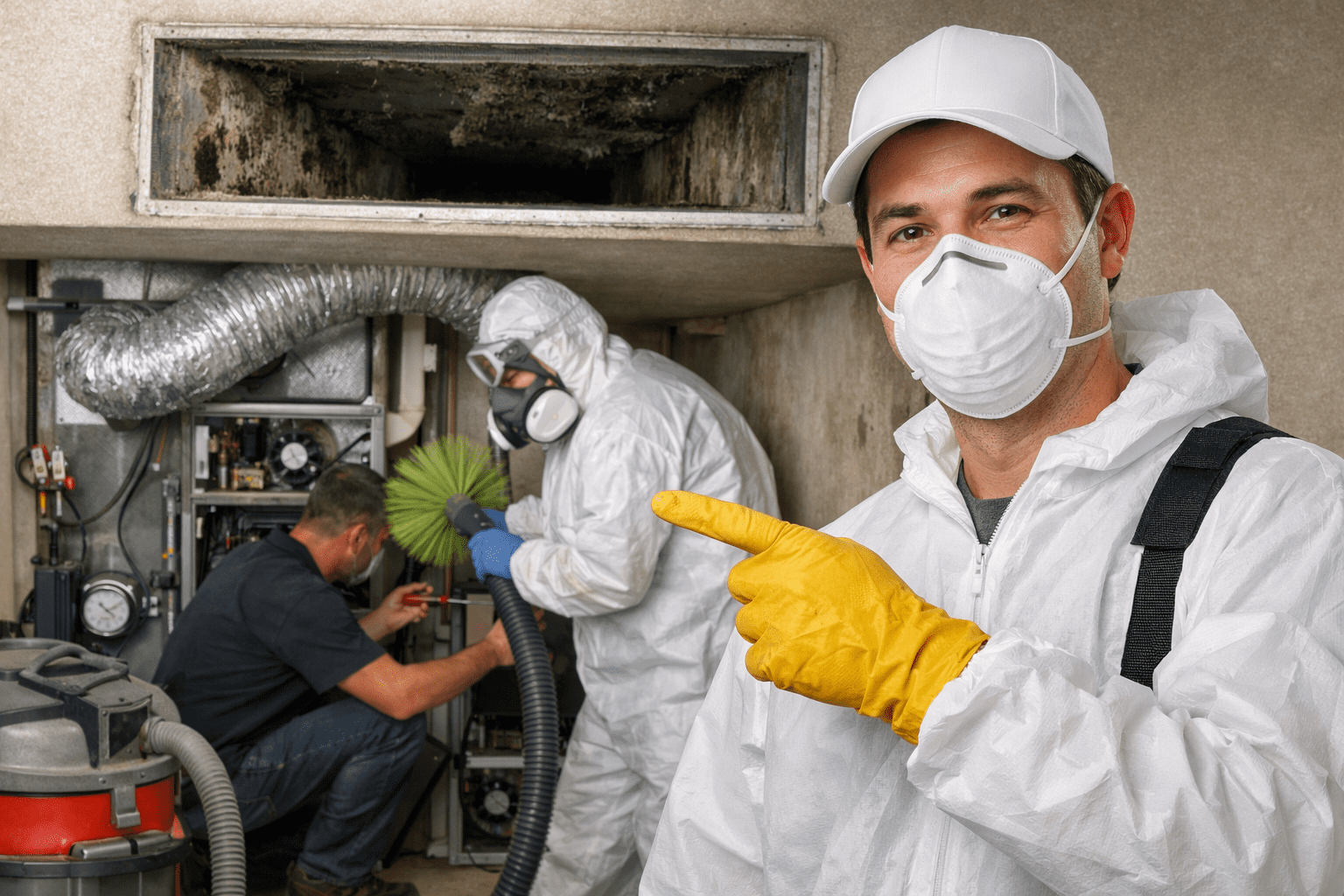
Air Duct Mold Removal & Cleanup Service Areas in Texas, TX
In Texas, long AC seasons, humidity, and occasional water intrusion can create the perfect conditions for mold inside ductwork, air handlers, and vent areas. If you’re noticing musty odors when the AC runs, recurring dust, or visible growth near vents, we help you confirm the cause and choose a safe, effective cleanup plan.
Air Duct Mold Cleanup Services Texas Homeowners Request
Real duct mold problems are usually moisture problems first. The best results come from: (1) locating moisture, (2) fixing the source, and (3) cleaning and restoring the HVAC system the right way—without spreading spores to clean rooms. Here are the most common service requests across Texas.
Duct & Vent Mold Inspection
We start by checking vents, returns, air handler areas, and nearby surfaces for visible growth, staining, and odor patterns—plus likely moisture sources that make mold come back.
Air Handler / Coil Area Checks
Mold often shows up around condensation points: the evaporator coil, drain pan, drain line, and cabinet seams. If condensation isn’t draining correctly, mold can reappear fast.
Targeted Duct Cleaning Guidance
When ducts are contaminated, cleaning should be paired with humidity control and system sealing where needed. We focus on practical steps that reduce re-growth risk—not just “blowing dust around.”
Vent & Register Sanitizing (Surface Areas)
Visible growth around registers and grilles can sometimes be addressed after moisture control—especially when the issue is condensation from cold air meeting humid indoor air.
Filter, Return, and Airflow Improvements
Poor filtration and uneven returns can pull dust and humidity into the system. We help outline filter choices, replacement schedules, and airflow basics that support a cleaner HVAC interior.
Post-Leak / Post-Flood HVAC Next Steps
After water damage, HVAC components and nearby duct runs may need inspection. Fast drying and correct cleanup decisions reduce the chance of hidden mold inside the system.
Musty Odor Troubleshooting
If odors spike when the AC turns on, the cause is often in the air handler, drain pan, or return pathways. We narrow the likely zone so you don’t waste money guessing.
Texas Humidity Prevention Plan
Long-term control usually comes down to a few things: manage indoor humidity, keep drains clear, seal duct leaks, and avoid condensation triggers around vents.
Why HVAC & Duct Mold Is Common in Texas
Texas homes run AC for long stretches of the year. When warm, humid air meets cold HVAC surfaces, condensation can form. If water doesn’t drain properly—or if ducts pull humid air from attics, wall cavities, or crawlspaces— mold risk goes up quickly.
Condensation at Coils & Drain Pans
Evaporator coils naturally collect moisture. If the drain pan overflows or the drain line is partially blocked, that constant dampness can feed mold inside the cabinet.
Duct Leaks Pulling Humid Air
Small duct leaks can pull in attic air (hot/humid/dusty). That extra humidity can condense in cooler duct sections—especially near supply runs and vents.
High Indoor Humidity
If indoor humidity stays high, vents may “sweat,” especially in bathrooms, kitchens, and rooms with poor airflow. The damp surface becomes a repeat-growth spot.
Dirty Filters & Dust Buildup
Dust supplies organic material. When dust sits in damp areas (like near coils or low-airflow returns), mold has more to feed on.
After Storms or Water Intrusion
Leaks around roofs, windows, or slab edges can raise indoor moisture. When the HVAC runs, it can spread odors and particles through the duct network.
Cold Spots + Warm Air = Condensation
In hot months, cold supply air meets warm air at registers and nearby ceilings. If humidity is high, that condensation cycle can repeat daily.
What to Do First if You Suspect Mold in Your Air Ducts
These steps are simple, practical, and focused on stopping the conditions that keep mold returning. If there’s extensive growth, strong odors, or a history of leaks, professional inspection is the fastest way to avoid trial-and-error spending.
1) Reduce Moisture Immediately
Set your thermostat to a stable temperature, use exhaust fans, and run a dehumidifier if available. If you have standing water, address that first.
2) Check the Filter & Replace It
A clogged filter increases dust and airflow stress. Replace the filter, and avoid running the system with a dirty, wet, or collapsed filter.
3) Look for Drain Pan / Drain Line Issues
If the air handler area is damp or you see overflow signs, the drain system may be blocked. This is a common mold trigger in Texas AC systems.
4) Don’t “Fog” Without a Plan
Sprays or fogging without fixing moisture can mask odors briefly, but the problem usually returns. The goal is moisture control + correct cleaning sequence.
5) Confirm Scope Before Spending
Mold at one vent can be local condensation—or a bigger HVAC issue. Confirm where growth is and what’s feeding it before paying for full-home services.
Quick clue: If the odor gets worse when the AC starts, suspect the air handler / coil area or return pathway first. If the odor is strongest in one room, check that room’s vent condensation and local moisture.
Our Air Duct Mold Cleanup Service Areas Across Texas, TX
Search your city or ZIP to find local air duct mold cleanup support across Texas. Each service-area page can include duct inspection guidance, HVAC mold risk factors, and recommended next steps for your location.
Common Questions About Air Duct Mold Cleanup in Texas
Straight answers focused on moisture control, safe cleanup, and preventing the problem from returning.
How do I know if the mold is in the ducts or just on a vent?
Vent mold can be local condensation at the register. Duct contamination is more likely when odors are system-wide, dust returns quickly after cleaning, or the air handler area stays damp. Inspection helps confirm scope.
Will duct cleaning alone fix the problem?
Usually not. If the moisture source remains (drain pan overflow, high humidity, duct leaks pulling attic air), mold can return. Cleaning works best after moisture control is addressed.
Why is the smell worse when the AC turns on?
The airflow can push odors from damp HVAC components—often near coils, drain pans, or returns. That pattern is a strong clue the issue is within the HVAC pathway.
What’s the most common cause in Texas homes?
Condensation + dust. Long AC seasons plus humidity create moisture, and dust provides “food.” Drain issues, poor filtration, and duct leaks make it worse.
Should I replace my ducts?
Replacement isn’t always necessary. If ducts are heavily contaminated, damaged, or poorly sealed/insulated, replacement may be considered—but only after confirming moisture and airflow conditions.
When should I call for help?
If odors persist, growth returns after cleaning, there’s a leak history, or you suspect HVAC cabinet/coil area mold, inspection and a step-by-step remediation plan saves money long-term.
Need Air Duct Mold Cleanup Help in Texas?
Get a clear plan: confirm where the mold is, stop the moisture source, and choose the right cleanup scope so the problem doesn’t keep returning in Texas humidity.